


Varicose veins are a disease of modern urban people.Almost every second inhabitant of our planet faces this problem, and mostly women suffer from varicose veins.If you don’t put off treating varicose veins until later, you can forever say “Bye!”ugly stars, bruises and lumps on the legs.Moreover, it is worth remembering that varicose veins are not only a cosmetic defect, but also a circulatory disorder, and therefore a major threat to health.
Ways to prevent the disease
Any doctor will tell you that it is better to prevent the onset of a disease than to treat it later.If you follow simple but effective preventive rules, then varicose veins will not be scary.
- An active lifestyle is the most important thing.Stagnation of blood in the extremities occurs due to a sedentary lifestyle.If a person spends the whole day in the office or driving a car, then several times a day it is necessary to take a 15-minute break to charge.
- Weight control – Excess weight is often the cause of spider veins and varicose veins on the legs.And this is understandable.After all, the legs bear all the load.
- In order to know nothing about varicose veins and vein removal, you should avoid constant heavy physical labor and static loads (varicose veins are a disease of saleswomen and hairdressers who stand on their feet all day).
- The right shoes.Constantly wearing high heels (more than 6 cm) leads to problems with blood vessels in the legs.Leave the stilettos for a short-term appearance.For everyday work, it is better to choose comfortable and correct shoes.
- Monitoring the use of hormonal contraceptives.The lack of such control often leads to problems with blood flow and blood vessels.
Conservative treatment of varicose veins

- Taking phlebotonic medications.
The course usually takes a long time, sometimes 2-3 months.A doctor may prescribe several courses a year with breaks.The drugs not only help restore already diseased vessels, but also prevent damage to others.
- Compression hosiery is an integral part of the treatment of varicose veins, even after vein removal surgery.
Some patients prefer elastic bandages to specialized underwear, but you need to learn how to cope with them.Improper application of them can lead to disruption of the treatment process.Only a doctor selects compression stockings.This is due to the fact that tights, knee socks and stockings have different compression classes.For example, class 1 is worn for prevention, class 2 - for visible symptoms, class 3 - for complicated disease.It should be repeated once again that vein surgery does not exclude the wearing of specialized knitwear.
Treatment methods and vein surgery
If preventive measures do not help, and varicose veins still appear, and along with it pain, discomfort and cosmetic defects, then you cannot do without consulting a phlebologist.After a thorough examination and conversation, the doctor will choose one of the treatment methods that is suitable in a given situation.
- A conservative method that involves the use of compression hosiery, ointments, gels and medications, as well as special exercises.
This treatment option is applicable in the initial stages of the development of the disease for pregnant women and for people for whom surgery “on the veins,” that is, on the veins, is contraindicated for health reasons.
- Sclerotherapy is the next most traumatic method.
The procedure is performed on an outpatient basis.Using a thin needle, the doctor injects a sclerosant into the affected vein, a specialized drug that “glues” its walls together.Thus, the diseased vein simply stops working, and the blood goes along a different path.The doctor makes several such injections, sometimes under the control of an ultrasound machine.
- Laser coagulation is not a vein operation, but belongs to the section of office surgery, that is, all procedures are performed in a doctor’s office, on an outpatient basis.
In essence, it is similar to the previous method, but is performed, of course, using a laser.This option is suitable for treating large vessels.The entire procedure takes a short time (approximately 40 minutes) and is done under local anesthesia.The doctor inserts an LED into the affected vessel and uses a laser to target the vein.The procedure is also carried out under ultrasound guidance.In subsequent appointments, it is possible to use a sclerosant.After laser coagulation, it is also necessary to wear compression stockings.
- Venectomy is a real operation that involves removing veins affected by the disease.
This method radically solves the problem.Due to the fact that medicine has stepped far forward, and more and more often it does not come to a venectomy, doctors are resorting to this method less and less.The main indications for surgery are: extensive vascular damage, trophic ulcers, as well as severe swelling and thrombophlebitis.Since venectomy is a real “vein” operation, it is performed exclusively in a hospital setting.
Also, after discharge, long-term wearing of compression stockings is mandatory, sometimes for several years.There is no need to worry about the veins being removed.After all, varicose veins are mainly affected by subcutaneous vessels, and through them the blood flow is small (only 10%).
How is vein removal performed?
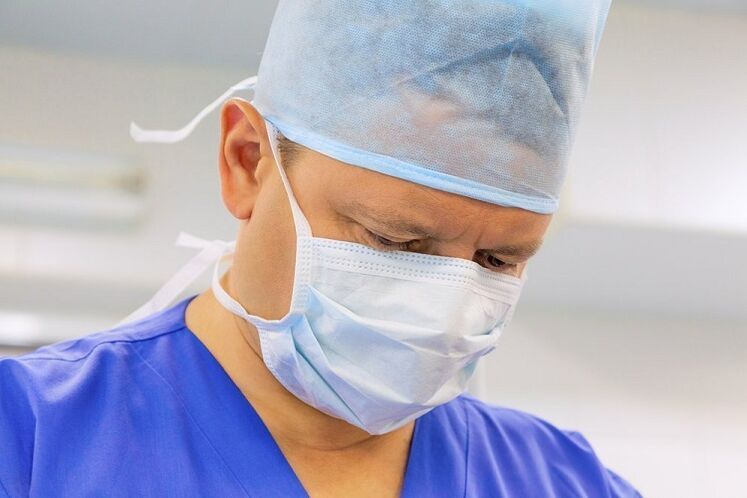
In fact, the operation is not as scary as it might seem.The task of the angiosurgeon is to remove the affected subcutaneous veins (large and small) and block the blood flow in the communicating vessels.You can achieve the desired goal using various methods (Babkokka, Narata).Only the attending physician makes a decision on the method of surgery depending on the severity of the disease.There is no significant blood loss during this procedure, as all the main blood flows through veins located deep in the human body.
The surgical treatment of varicose veins takes no more than two hours.
Alternative method for treating varicose veins
Hirudotherapy (treatment with leeches) has long been used in medical practice in the treatment of varicose veins.Moreover, it is worth noting that this method is very effective.
The most important and useful thing in this procedure is the saliva of leeches, or rather the hirudin contained in it.This substance ensures that venous blood stops rapidly clotting in the affected areas, and, therefore, it does not accumulate and form blood clots.The blood becomes more liquid.
With a competent procedure, you can get rid of varicose veins, leg pain, swelling and visible cosmetic defects.Of course, in advanced cases, leeches are unlikely to help; here, only removal of the veins is relevant.But in the initial stages, hirudotherapy is a way out.
This unusual method of treating varicose veins has a number of contraindications: anemia, hypotension, hemophilia.Pregnant women should also not resort to leeches for help.
Pay special attention to your health.Don't start the disease!And if it so happens that vein surgery is indicated for you, then you should not be afraid of it, since modern methods and techniques of surgical intervention have advanced far, and you can quickly return to your normal rhythm of life.